
From the Lens
A collection of underwater photographs by Camera and a Shark — where storytelling meets the sea, and each image captures the quiet connection between people and ocean life.
Stories in Ocean Photography
From the Lens is where underwater photography becomes storytelling. Each image captures a real encounter — from sharks and rays to coral gardens and the fleeting light of the open sea.
These photographs reflect what the ocean teaches: patience, presence, and perspective. Together, they form a visual journal of the beauty and resilience that live beneath the surface.
Click any image to enlarge and read the story behind the moment:

One of my all-time favorite images. When we had the honor of encountering mako sharks for the first time in Cabo San Lucas, Mexico, two of these apex predators showed up. Known as the fastest sharks — reaching speeds up to 47 miles per hour — the competition for food kept the action moving at frantic speeds, culminating in this epic moment as one shark torpedoed upward and tore through the bait in a single, explosive strike.
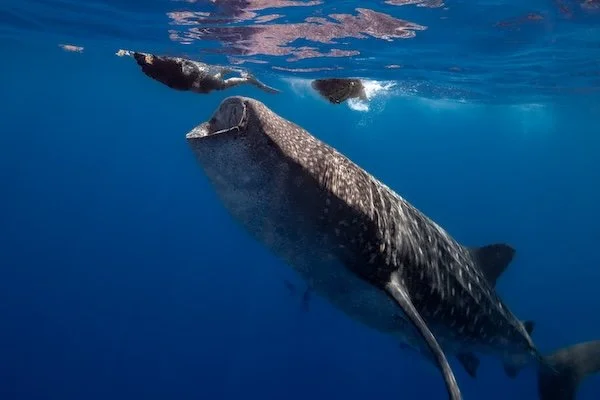
Every year, hundreds — if not thousands — of whale sharks migrate north along the Mesoamerican Barrier Reef, creating the largest gathering of its kind in the world. From Belize to this moment somewhere between Isla Blanca and Isla Mujeres, snorkelers and divers get an unrivaled chance to meet these gentle giants in person. Conservation begins with awareness, and few ocean ambassadors open hearts as quickly as a whale shark does.
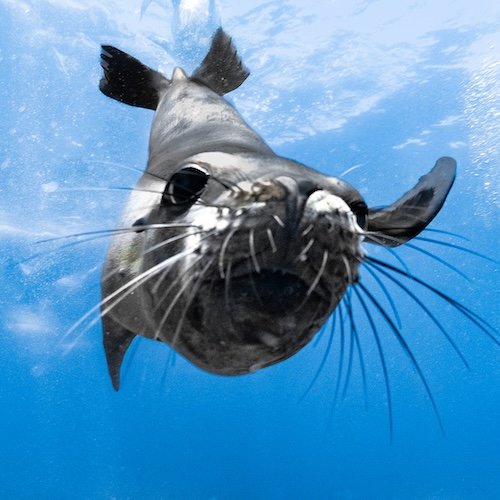
Visiting the sea lion colonies of Baja California was a long-time bucket-list item. As much as I’m a shark enthusiast, there’s plenty of other wildlife that excites me, and the playful sea lion pups of Espiritu Santo always fit the bill. Known for their energetic flips and mischievous behavior toward divers—sometimes biting fins or stealing snorkels—they fill your bottom time and camera cards with nonstop action. And what’s more enthralling than having your first sea lion pup use your camera dome as its own personal mirror? In that innocent, wide-eyed stare, I was reminded how much of their world still lies ahead of them — and how their curiosity has a way of renewing mine.
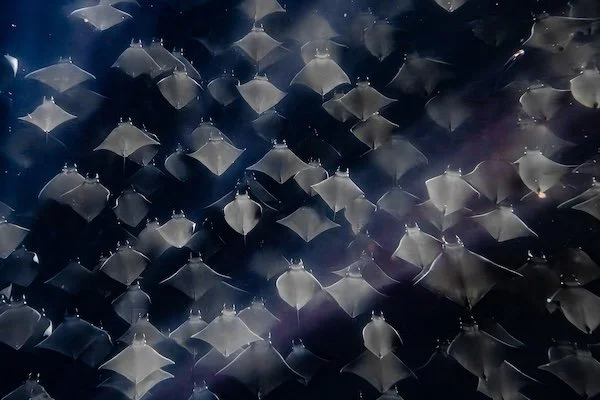
You see pictures of them on the internet, but nothing prepares you for the moment you slip into the water and find yourself surrounded by hundreds of mobula rays — sometimes flipping through the blue, sometimes pancaking straight out of it. In that fog of flesh, you somehow become smaller — a quiet reminder that the ocean has its own scale, its own rhythm, and we’re only ever guests within it.
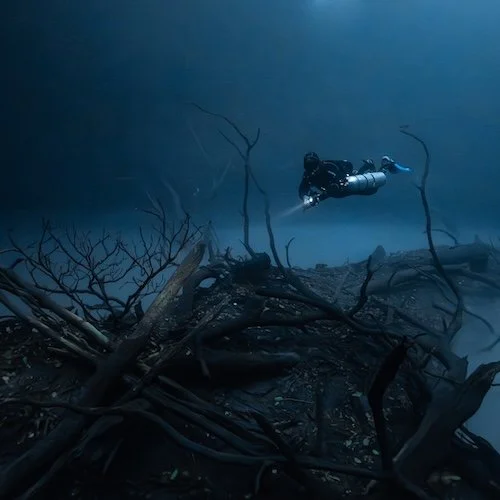
Water isn’t always the crystal-clear turquoise you find along the Mexican Riviera. Sometimes you have to head inland to discover nature’s more hidden watering holes. While cenote diving isn’t one of my favorite pastimes, entering the eerily quiet caverns — like this one at Cenote Angelita — has a way of stripping everything down to stillness, offering a moment of clarity and a reminder that we must do better to protect all of Earth’s natural resources.
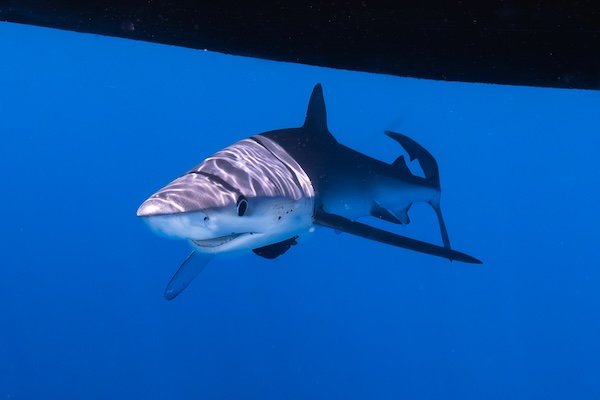
The cutest of the bunch — the playful blue shark. I wish I could replace everyone’s image of Jaws with this face everyone can love, a reminder that not every shark story needs to be told in teeth and fear.
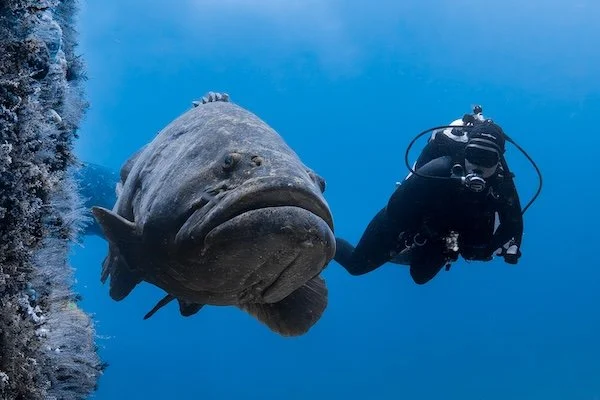
You can’t believe your eyes when you encounter a Goliath grouper for the first time. How can a fish be this massive — nearly the size of a shark? Then, as you’re still processing its scale, you look up and see the water shifting with dozens more, all gathering for South Florida’s annual late-summer aggregation and spawning event. It’s a moment that redefines what “big” feels like underwater and reminds you just how wild these oceans still are.
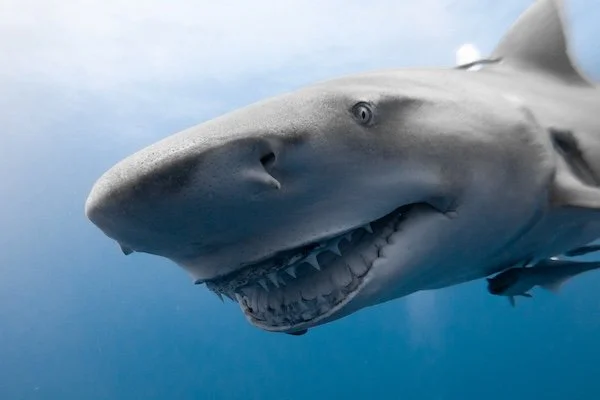
It’s always an exciting day when the world-famous Snooty the lemon shark shows up for a dive in the waters of Jupiter, Florida. Lemon sharks live up to their reputation for not respecting anyone’s personal space — including other sharks. And when Snooty decides to lean in and peek into your camera to say hello, you quickly realize she’s every bit as bold and charming as her reputation suggests.
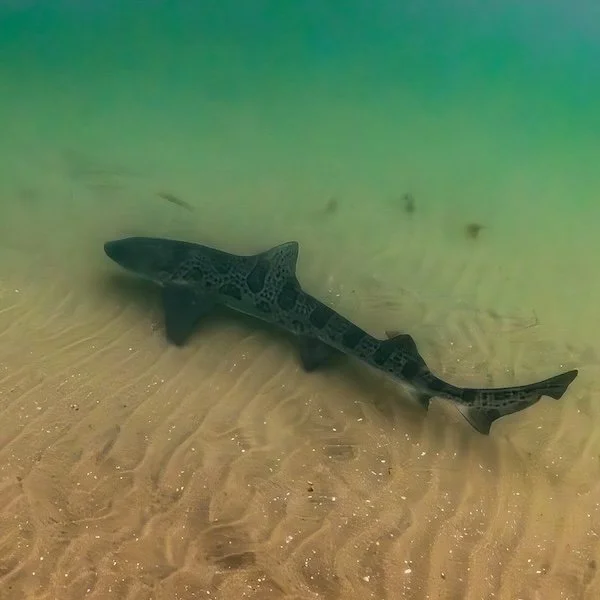
One of the first sharks I ever saw turned out to be one of my most estranged, despite growing up in their homeland of Southern California. Over two decades after first encountering shark after shark along the warm shores of La Jolla, I finally returned to fall back in step with these beautifully patterned leopard sharks once again. And with that same energy and enthusiasm, I also rekindled the pursuit of answering my own question — that a zebra shark is, in fact, not a leopard shark at all.
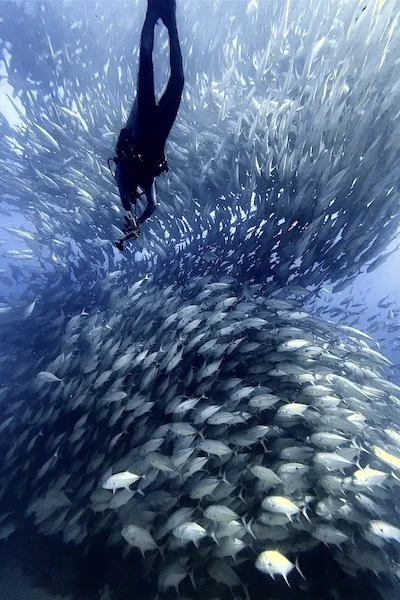
It took me a while to finally make it down to Cabo Pulmo, Mexico, and witness the famed jack bait balls for myself. When you drop into the water and the light fades beneath the shadow of thousands of fish, the ocean can make you nervous. But as the sun catches the edges of these massive tornados and you drift into the calm eye of the storm, a surprising sense of tranquility sets in — a reminder that the ocean may be vast, but there’s a quiet safety in the way these fish move as one.
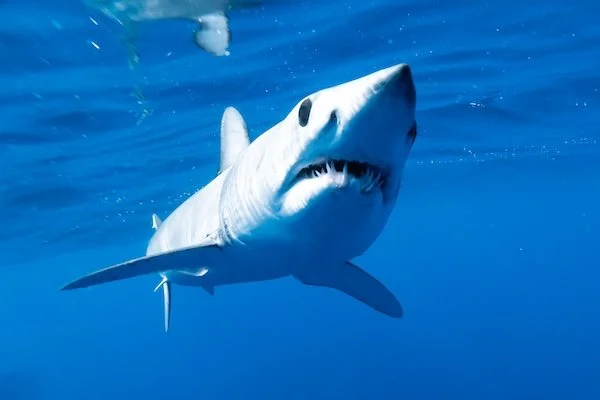
And there it was — my first mako sighting. I’d spent years trying to encounter one in the Atlantic, each time striking out. It wasn’t until a fateful trip to Cabo San Lucas in 2023 that I finally got the chance to meet her. One of the guides mentioned that the currents and wind direction were lining up in our favor, giving us a real shot at seeing one. I tried not to get my hopes up, fearing another letdown, but this time, the moment my feet hit the water, there she was — sudden, electric, unmistakable. After a brief stare into those large, glassy eyes, I snapped the photo that marked my very first mako shark encounter. Looking into those deep, dark eyes, I felt that familiar truth again — no matter how many years I’ve spent in the ocean, a first encounter can still catch me off guard and reconnect me to why I’m here.

Every time I see one, it feels like seeing one for the first time — a line I repeat out loud whenever a whale shark appears from the blue. Their gorgeously spotted patterns look like a fresh constellation painted across their backs. The largest fish in the world, their imposing 30-plus-foot bodies give way to a surprising gentleness as filter-feeders — a reminder that, just like humans, it’s misguided to group all sharks under the same story.

I have a polarizing relationship with dolphins. On one hand, they can be some of the most playful and interactive animals in the ocean. On the other, they’re one of the few species that mirror us a little too well — throwing tantrums and acting mischievous when they’re not in the mood to entertain anyone outside their pod. But when dolphins are in the right mood, their shifting formations and effortless antics create some of the ocean’s most joyful encounters and photo opportunities.
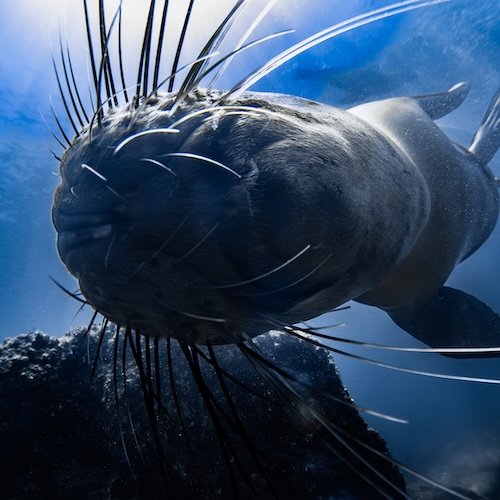
Take your eyes off them for a split second, and the sea lion pups of Espiritu Santo Island outside La Paz, Mexico will certainly sneak up on you — whiskers and all. There’s always one more playful surprise waiting just beyond your peripheral.
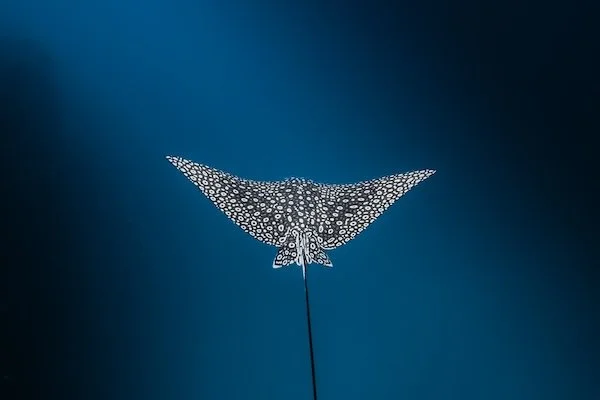
Among groups of 4–12 rays at the C-56 wreck in Puerto Morelos, MX, it was a small juvenile eagle ray — barely half the size of the others — that caught my eye. From a distance, I was captivated by its reflection: white spots packed so tightly along the edges they formed a glowing halo, then thinning toward the center like a shadow embedded inside its body. The pattern wreaked havoc on my photos, but its boldness stood out even more — this tiny ray kept finding itself at the helm of the formation. It’s a reminder that every animal in the ocean reveals its character when you slow down long enough to notice.